What Were Traditional Impressions?
For decades, orthodontists used physical impression trays filled with alginate or silicone material to create a mould of your teeth. That mould was then sent to a lab to fabricate appliances such as braces models, retainers, or aligners.
While effective, traditional impressions had downsides:
• Gagging or discomfort
• Messy material and unpleasant taste
• Risk of distortion if you moved
• Need for retakes if bubbles or errors occurred
• Longer turnaround times
They worked, but they were not ideal.
What Is 3D Scanning?
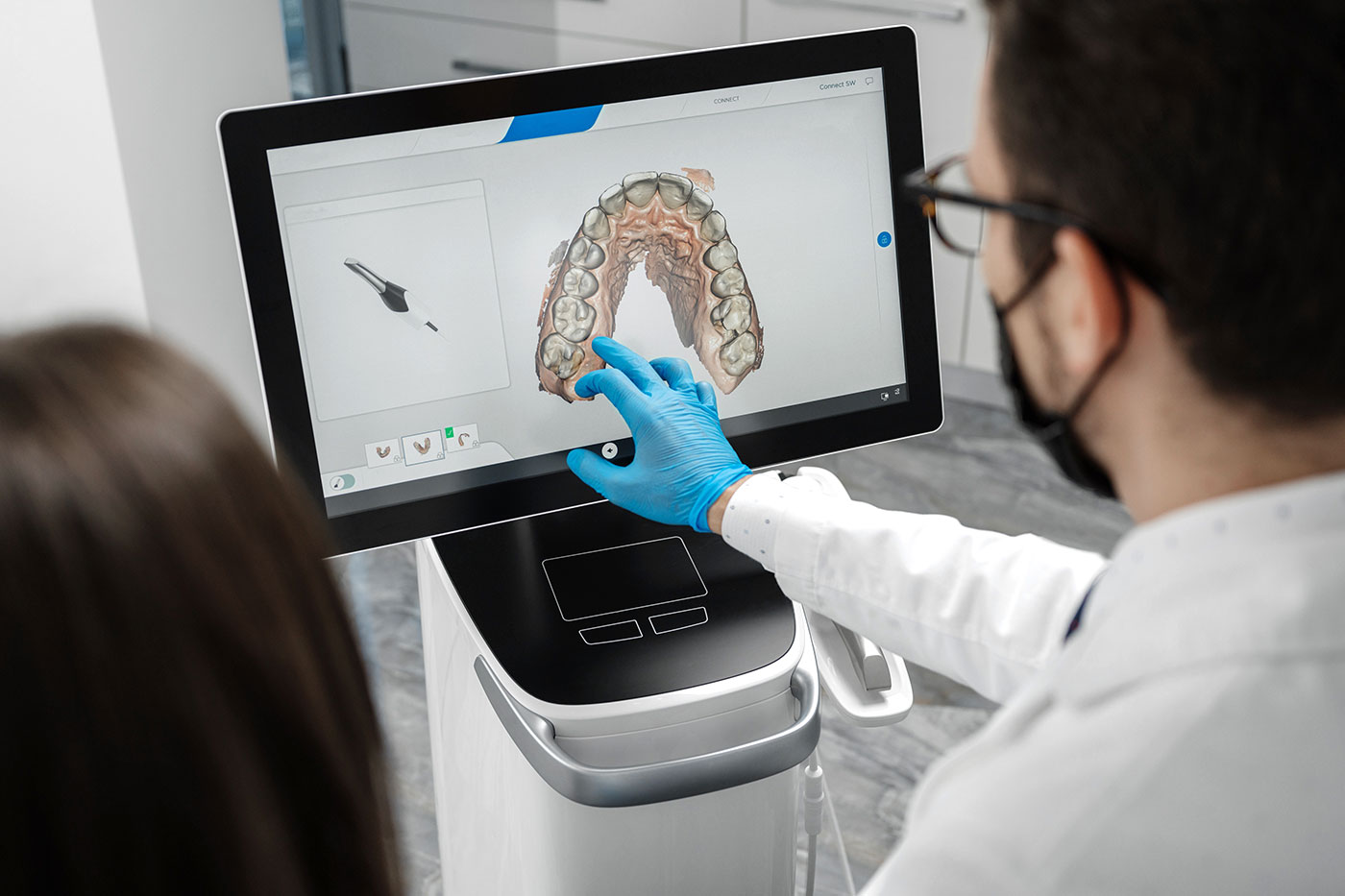
3D scanning uses a small handheld wand to capture thousands of digital images per second. These images are stitched together to create a highly accurate, full-colour 3D model of your teeth and bite in real time.
Instead of biting into putty, you simply sit comfortably while your orthodontist glides the scanner around your mouth. Within minutes, your digital model appears instantly on screen.
This technology has transformed how orthodontic practices plan and deliver treatment.
Why 3D Scanning Is Better for Patients
1. Comfort
No trays. No gag reflex. No messy materials. For children and nervous patients especially, this is a significant improvement.
2. Speed
A full digital scan usually takes just a few minutes. If a small area needs rescanning, it can be corrected instantly without starting over.
3. Accuracy
Digital scans reduce distortion and shrinkage that can occur with traditional materials. This leads to better fitting appliances and more precise treatment planning.
4. Instant Visualisation
One of the biggest benefits is that you can see your teeth on screen immediately. Many systems even simulate potential results, allowing you to visualise your future smile before treatment begins.
For patients considering clear aligner treatment, digital scanning is essential for designing custom aligners with precision.
Why It Improves Treatment Outcomes
3D scanning does not just improve comfort. It enhances overall treatment accuracy.
Digital models allow orthodontists to:
• Measure tooth movement down to fractions of a millimetre
• Analyse bite relationships in greater detail
• Plan complex movements with greater predictability
• Monitor progress over time using scan comparisons
Because everything is stored digitally, your records are secure and easy to access if refinements are needed later.
Is There Ever a Need for Traditional Impressions?
In most modern orthodontic practices, physical impressions are now rarely required. In certain specialised cases or when specific laboratory requirements exist, traditional methods may still be used.
For the vast majority of patients, however, digital scanning has replaced putty impressions.
What This Means for You
If you have been postponing orthodontic treatment because you dread impressions, you can feel reassured. Modern orthodontics is cleaner, faster, and far more comfortable than it used to be.
3D scanning is one example of how technology has reshaped the patient experience, making treatment more precise while reducing stress at every stage.